
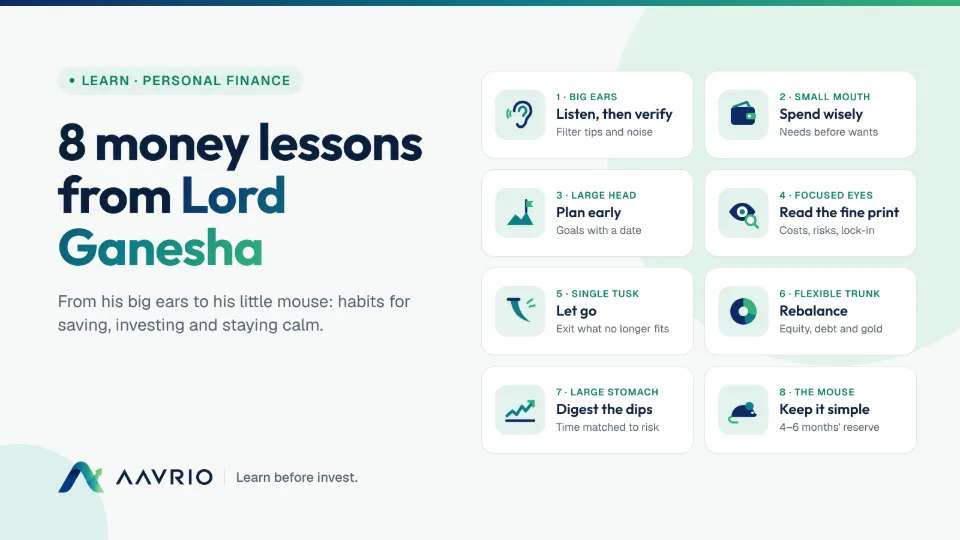
Lord Ganesha is worshipped first at every new beginning, and his form doubles as a simple money guide. Each part of Ganesha, from his big ears to his small mouse, points to one habit that helps you save, invest and avoid costly mistakes.
1. Big ears (Lambakarna): listen, then verify
Learn before you act, but filter what you hear. Tips about the next "multibagger" spread fast on WhatsApp and social media, usually with no evidence behind them. Check any tip against an official source, such as the company's stock exchange filings or the fund's factsheet. In India, paid investment advice must come from a SEBI-registered adviser.
2. Small mouth: spend less than you earn
Separate needs (rent, groceries, school fees, EMIs) from wants (eating out, gadgets, upgrades). Pay credit card bills in full: card interest in India commonly runs at about 36 to 45 percent a year, more than any regular investment earns.
3. Large head (Gajanana): plan early
Give every goal an amount and a date: short term (under 3 years), medium term (3 to 7 years) or long term (over 7 years). Then start small. Money invested longer has more time to compound, which is why a monthly SIP in a mutual fund, the PPF or the NPS suits beginners.
4. Focused eyes: read the fine print
Before you invest or borrow, find the costs (expense ratio, exit load, fees), the lock-in period and the risk level. Check what is guaranteed and what is only "expected". Then look past daily market noise and keep your long-term plan.
5. Single tusk (Ekadanta): let go of what no longer fits
Ganesha broke his own tusk to keep writing the Mahabharata. Investors can drop what holds them back too. Ask: if I did not own this today, would I buy it now? Review funds that lag for years or overlap with others, and check exit loads and tax before selling.
6. Flexible trunk (Vakratunda): adapt and rebalance
Market moves shift your mix of equity, debt and gold over time. Rebalancing means moving back to your planned mix, usually once a year. Review it again after big life changes such as marriage, children or a new job.
7. Large stomach (Lambodara): digest the dips
Equity can beat inflation over long periods, but it also falls, sometimes by 20 percent or more. Keep money you need within two years out of equity, and give long-term holdings time to recover.
8. The mouse (Mushika): keep it simple, keep a reserve
If you cannot explain how a product makes or loses money in two sentences, take more time before you invest. Build an emergency fund of four to six months of expenses in a savings account or liquid fund before you take investment risk.
Frequently asked questions
What are the financial lessons from Lord Ganesha?
Listen but verify, spend less than you earn, plan early, read the fine print, let go of what no longer fits, rebalance, accept market falls and keep things simple with an emergency fund.
How big should an emergency fund be in India?
A common guideline is four to six months of household expenses, including EMIs, kept somewhere easy to withdraw from.
Is it too late to start investing?
No. Starting early helps, but starting now is always better than waiting.
This lesson is for education only and is not investment advice. Investments in securities and mutual funds are subject to market risks. Read all scheme-related documents carefully.