

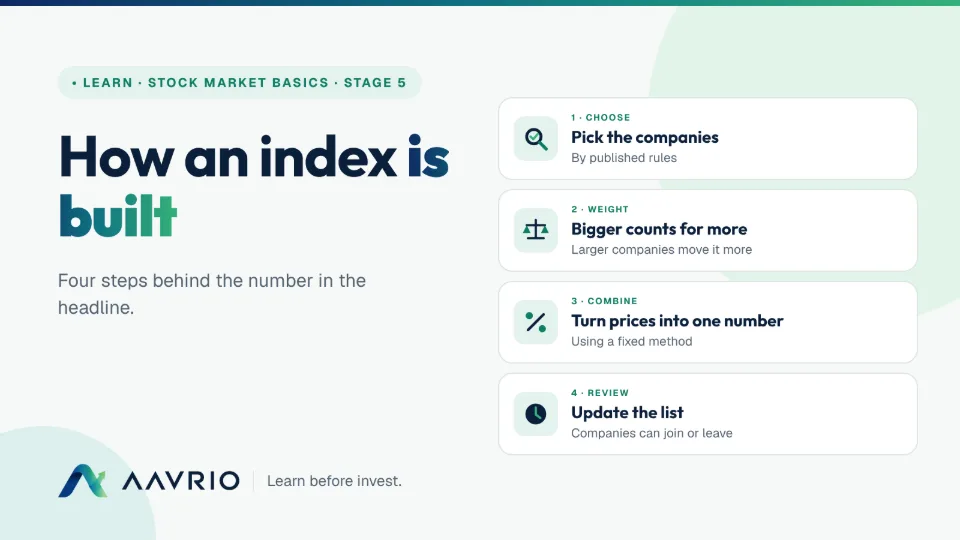
An index looks like one simple number. Behind it sits a set of rules, and knowing them helps you read the headline better.
Step 1: choose the companies
Each index has rules about who gets in. Usually a company must be listed, actively traded and large enough to matter. Those rules are published by the exchange or index provider.
Step 2: decide how much each company counts
Not every company counts equally. In many indices a bigger company has a bigger weight, so its price move shifts the index more than a smaller company's. Picture a school vote where larger classes get more votes.
Step 3: turn prices into one number
The index provider combines the weighted prices into a single figure using a fixed method. The starting value was set once, and the number moves from there as prices change.
Step 4: review from time to time
Companies grow, shrink or get delisted, so the list is reviewed on a schedule. A company can be added or removed, which keeps the index a fair picture of the market.
Why this matters
Because larger companies weigh more, a few big shares can move an index a lot even if most others stay flat. Keep that in mind when a headline says the market was strong or weak.
Check yourself
Why can a few large companies move an index a lot?
Answer: because bigger companies usually carry a bigger weight in it.
Frequently asked questions
Who decides which companies are in an index?
The index provider, following published rules that anyone can read on its website.
Does the list of companies change?
Yes. It is reviewed from time to time, and companies can be added or removed.
Is an index a simple average of prices?
Not usually. Companies are weighted, so larger ones have more effect on the number.
This lesson is for education only and is not investment advice. Investments in securities are subject to market risks.