

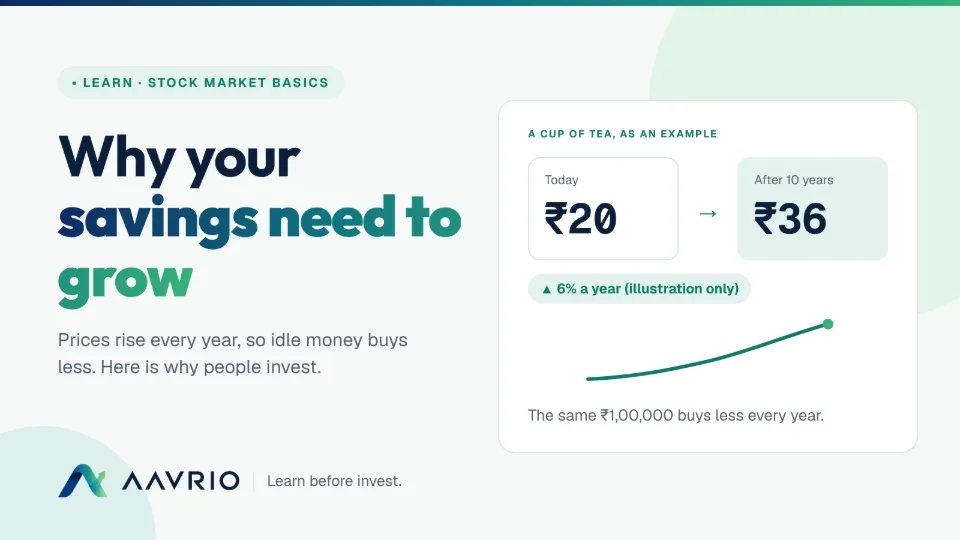
Imagine you keep ₹1,00,000 in a cupboard for ten years. The notes stay the same, but what they can buy shrinks.
Prices rise, and that is called inflation
Inflation is the steady rise in the price of things we buy. As an example, take a cup of tea that costs ₹20 today. If prices rise 6% a year, that cup costs about ₹36 after ten years. The 6% is only an illustration, not a forecast.
So the same ₹1,00,000 buys fewer cups, fewer groceries and fewer train tickets as the years pass. Saving keeps the amount safe, but the same amount buys less each year.
What investing tries to do
Investing means putting money into something that can grow over time, such as a bank deposit, shares or gold. The aim is for your money to grow at least as fast as prices do, and ideally faster.
That growth helps with things you already want:
A home, a child's education or a wedding.
Retirement, when your salary stops but your bills do not.
A cushion, so one bad year does not force you to borrow.
Why start early
Money that grows can also earn growth on its earlier growth. This is called compounding, and it needs time more than it needs a big amount. A small sum started early often does more than a large sum started late.
The next lesson looks at the main places people put their money.
Check yourself
If prices rise 6% a year, will ₹1,00,000 kept in a cupboard buy more, the same or less after ten years?
Answer: Less. The notes stay the same, but each rupee buys less.
Frequently asked questions
What is inflation in simple words?
It is the rise in prices over time. When inflation is high, each rupee buys less than it did before.
Is saving the same as investing?
No. Saving means setting money aside, usually in a safe place. Investing means putting that money to work so it can grow, which also means it can carry some risk.
Do I need a lot of money to start?
No. Many options let you begin with a small amount. What matters more is starting early and staying regular.
This lesson is for education only and is not investment advice. Investments in securities are subject to market risks.