
Back to our bakery: after a good year, the bakery has profit left over. It can keep the money to grow, or share some of it with the owners. A dividend is that share.
What a dividend is
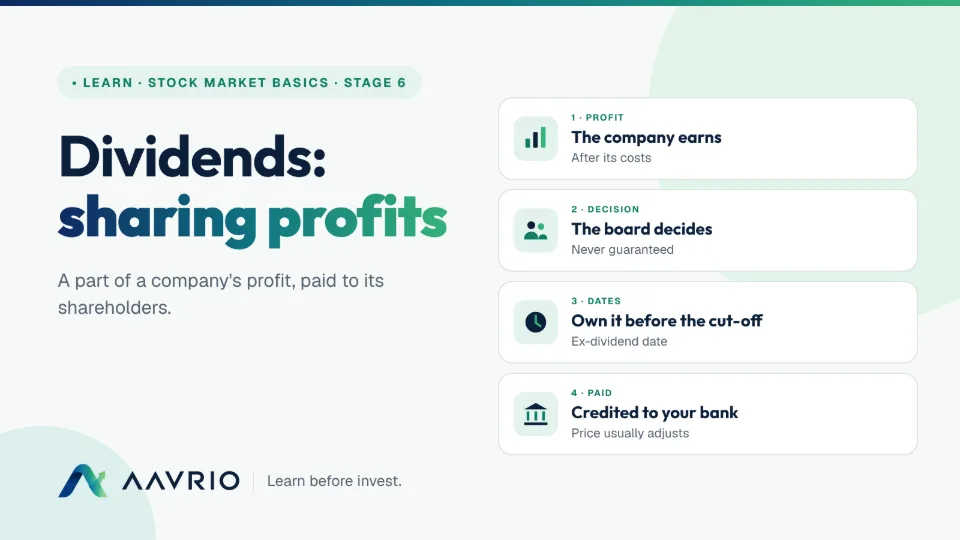
A dividend is a part of a company's profit paid to its shareholders, usually per share. If a company declares a dividend of a certain amount per share and you own 10 shares, you receive ten times that amount.
Who decides
The company's board proposes it, and in some cases shareholders approve it. A company is never forced to pay a dividend. Some pay regularly, some pay rarely, and some growing companies keep their profit to expand instead.
The cut-off date
A company announces a record date to decide who gets the dividend. You must own the share before the matching ex-dividend date. If you buy on or after that date, the dividend goes to the earlier owner. Your broker's app and the exchange notices show these dates.
What happens to the price
When a company pays out cash, it has less cash left. So the share price usually adjusts downward on the date the dividend is set aside. That is why a dividend is a share of the value you already own, not a free bonus.
Check yourself
Who decides whether a company pays a dividend?
Answer: the company, through its board. It is never guaranteed.
Frequently asked questions
Do all companies pay dividends?
No. Some keep their profit to grow the business instead.
Where does the dividend go?
It is credited to the bank account linked to your demat account.
Is a dividend taxed?
Dividend income is generally taxable. Check the Income Tax Department's current rules for how it applies to you.
This lesson is for education only and is not investment advice. Investments in securities are subject to market risks.