

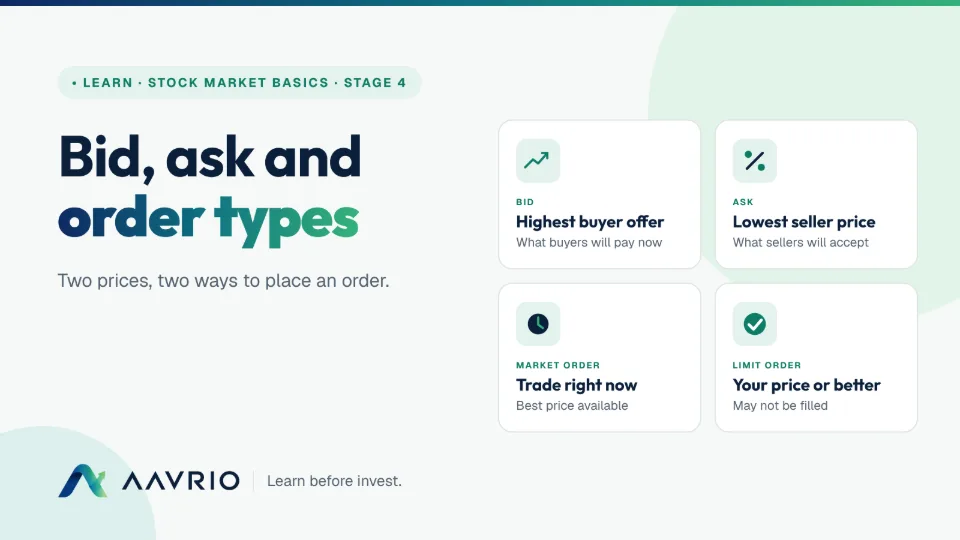
When you look at a share, you may see two prices side by side. They tell you a lot about how easily you can trade.
Bid and ask
The bid is the highest price any buyer is currently offering. The ask, also called the offer, is the lowest price any seller is currently willing to accept. The bid is always a little below the ask, because if a buyer and a seller agreed, the trade would already have happened.
The spread
The gap between the bid and the ask is the spread. A small spread usually means many people are trading the share, so it is easy to buy or sell. A wide spread means fewer people are trading it, and you may have to give up some price to get a trade done.
Market order
A market order says: buy or sell now, at the best price available. It is quick and almost always fills. But you do not control the exact price, and in a fast-moving or thinly traded share it can be different from what you expected.
Limit order
A limit order says: buy or sell only at this price or better. You control the price, but the order fills only if the market reaches it. If it never does, the order stays unfilled.
Which one to use
Neither is right for everyone. A limit order protects you from a surprise price. A market order protects you from missing the trade. Many beginners start with limit orders so they can see exactly what they agreed to pay.
Check yourself
Which order type lets you decide the price but may not be filled?
Answer: the limit order.
Frequently asked questions
What is the spread?
It is the difference between the highest bid and the lowest ask for a share.
Does a market order guarantee the price?
No. It guarantees that the order is placed at the best price available at that moment, which can differ from the last price you saw.
Why did my limit order not execute?
Because the share did not reach your price. The order stays pending until it does or until it expires.
This lesson is for education only and is not investment advice. Investments in securities are subject to market risks.