

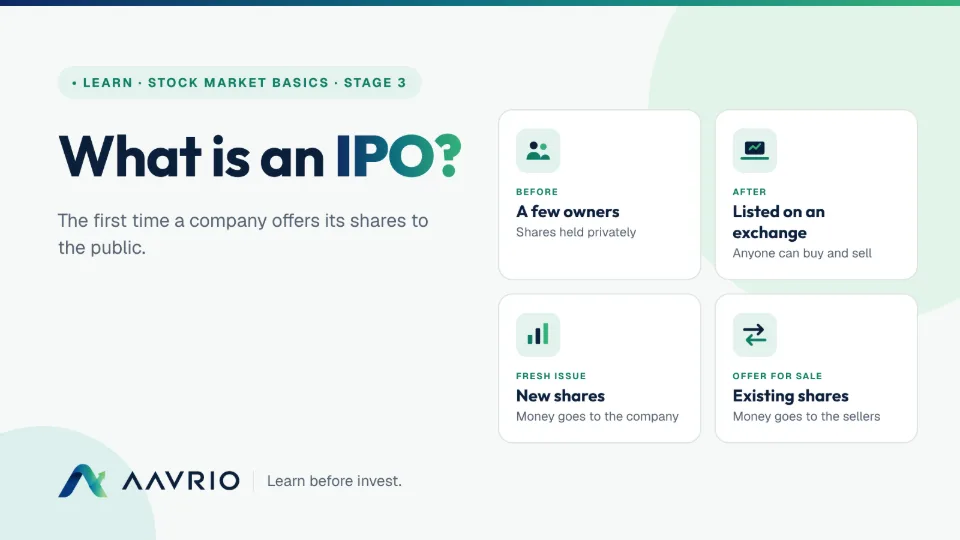
An IPO announcement can look full of jargon. Once you see the order of events, most of the words fall into place.
The steps
The company files an offer document with SEBI, which describes the business, its accounts and its risks.
The offer is announced with the dates and a price band.
The offer opens for a few days, and investors apply through their broker or bank.
The shares are allotted to successful applicants.
The company lists on the exchange and trading begins.
Terms you will see
Prospectus: the offer document. It is the main place to read about the company and its risks.
Price band: the range within which you can bid, for example from a lower price to a higher one.
Lot: the smallest bundle of shares you can apply for.
Subscription: how many times the shares on offer have been applied for. If it is more than one, demand is higher than supply.
Allotment: the shares you actually receive. You may get all you applied for, some, or none.
How your money is handled
When you apply, the amount is blocked in your bank account, not taken out. If you are allotted shares, the money for those shares is paid. If you get nothing, the block is released.
Read before you apply
The prospectus lists the risks the company itself sees. Even the summary is a better starting point than a social media post about the IPO.
Check yourself
What does it mean if an IPO is subscribed more than once?
Answer: more people applied than there are shares on offer.
Frequently asked questions
What is a price band?
It is the range of prices within which investors can bid for the shares during the offer.
What is a lot?
A lot is the smallest number of shares you can apply for. You apply in multiples of it.
What if I do not get any shares?
The amount blocked in your account is released, and nothing is deducted.
This lesson is for education only and is not investment advice. Investments in securities are subject to market risks.