

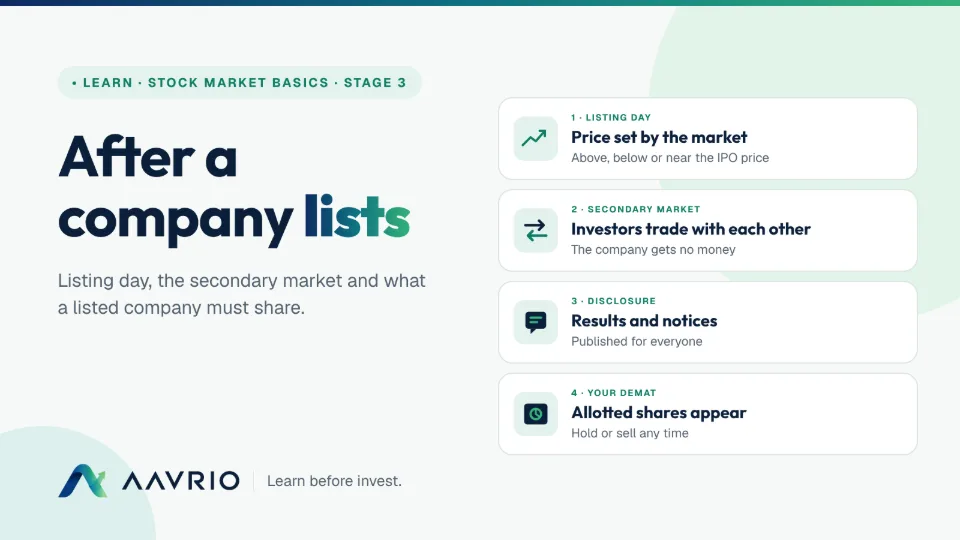
After allotment comes listing day, when the shares start to trade on the exchange for the first time.
Listing day
On the first day, buyers and sellers decide the price. It can open above the IPO price, below it or close to it. Neither outcome tells you how the company will do over the years.
Two markets
When a company sells shares directly to investors in the IPO, that is the primary market. Once the shares are listed and people trade them among themselves, that is the secondary market. The company does not receive money when you buy from another investor on the exchange.
What a listed company must do
Being public brings duties. A listed company must publish its results at regular intervals and tell the exchange about important events. This is how you, as an investor, can follow how the business is doing, and the exchange notices are free to read.
Your shares in your demat account
If you were allotted shares in the IPO, they appear in your demat account. From then on you can hold them or sell them through your broker, like any other listed share.
The next stage looks at what happens when you press buy, and what makes a share price move.
Check yourself
When you buy a listed share from another investor, does the company get your money?
Answer: No. The money goes to the seller. The company only gets money in the IPO or a fresh issue.
Frequently asked questions
What is the secondary market?
It is where investors buy and sell already issued shares among themselves on an exchange.
Does the listing price show how good the company is?
No. It only shows what buyers and sellers agreed on the first day. A company has to be judged on its business over a longer time.
Where do I find a listed company's results?
On the exchange websites and on the company's own investor page, where results and notices are published.
This lesson is for education only and is not investment advice. Investments in securities are subject to market risks.