

When the RBI announces its policy, news channels talk about it for hours. The reason is simple: interest rates touch almost everyone.
Who the RBI is
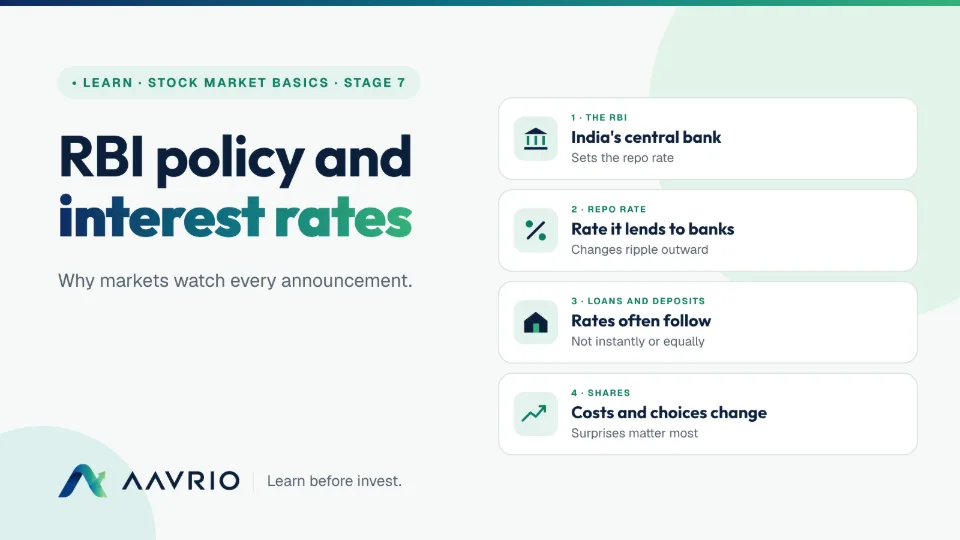
The Reserve Bank of India is the country's central bank. Among other duties, it sets the main interest rate in the economy, called the repo rate. It announces its decision after a regular policy meeting.
What the repo rate is
The repo rate is the rate at which the RBI lends money to banks. When it changes, banks often change what they charge on loans and pay on deposits, though not instantly or by the same amount.
Why it matters to you
When rates rise, loans such as home loans can become costlier, and deposits can pay more.
When rates fall, loans can become cheaper, and deposit rates can slip.
Why it matters to shares
Companies borrow money, so higher rates raise their costs. Investors also compare shares with safer options like deposits, so a change in rates can change where money flows. Markets try to guess the RBI's move in advance, so the surprise matters more than the move.
For the latest rate and the RBI's own explanation, always read the RBI's policy statement on its website.
Check yourself
What is the repo rate?
Answer: the rate at which the RBI lends money to banks.
Frequently asked questions
Who decides the repo rate?
The RBI, after its regular policy meeting. The decision is published on the RBI website.
Does a rate cut always push shares up?
Not always. Markets often expect it in advance, so the reaction depends on what was expected.
Where can I find the current repo rate?
On the Reserve Bank of India's website, in its latest monetary policy statement.
This lesson is for education only and is not investment advice. Investments in securities are subject to market risks.