
These are the last two actions a company can take with its shares. They are opposites in one way: one brings money in, the other sends it out.
Rights issue
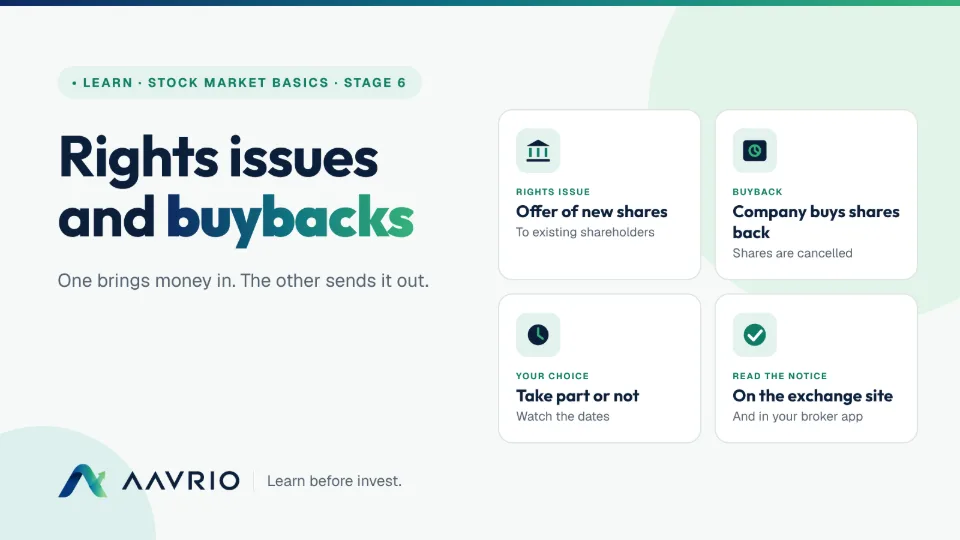
A company that needs money can offer new shares first to its existing shareholders. This is a rights issue. You are told how many shares you may buy for each share you hold, and at what price. The offer is open for a limited time.
You can take it up, sell your right if that is allowed, or let it lapse. If you do nothing, your share of the company can shrink, because new shares have been added and you did not buy yours.
Buyback
In a buyback, a company uses its own money to buy shares back from shareholders, often at a price set above the market price. The shares it buys are then cancelled, so fewer shares remain. You can usually choose whether to tender your shares.
Side by side
A rights issue brings money into the company; a buyback spends the company's money.
A rights issue creates new shares; a buyback removes shares.
Both come with dates you must watch.
The five actions at a glance
Dividend, bonus, split, rights and buyback: each is a company's way of using its profit or shares. Read the notice, check the dates and see what it asks you to do.
Check yourself
Which of the two raises money for the company?
Answer: the rights issue.
Frequently asked questions
Do I have to take part in a rights issue?
No. It is your choice, but ignoring it may reduce your share of the company.
Why would a company buy back its own shares?
Common reasons are returning surplus cash to shareholders or reducing the number of shares in circulation.
Where do I read about these offers?
In the company's notices on the exchange websites and in your broker's app.
This lesson is for education only and is not investment advice. Investments in securities are subject to market risks.