

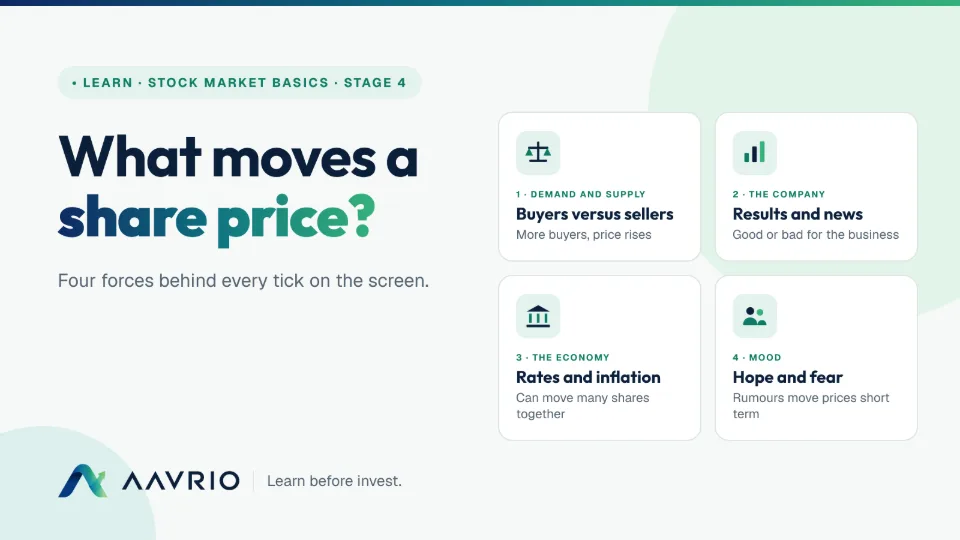
Open any stock app and the price keeps ticking. It is not random. Behind each tick is a buyer and a seller who agreed on a number.
Demand and supply
This is the basic force. If more people want to buy a share than sell it, buyers have to offer more to get it, and the price rises. If more people want to sell, sellers have to accept less, and the price falls. Everything else on this page works by changing how many people want to buy or sell.
News about the company
A share is a slice of a business, so news about the business matters. Good quarterly results, a new product or a big order can make buyers willing to pay more. A loss, a legal problem or a change at the top can have the opposite effect.
The wider economy
Some news touches many companies at once. A change in interest rates, a rise in inflation or a new government policy can move whole sectors. We cover these in a later stage.
Mood and rumours
Prices also move on mood. When people feel hopeful, they buy more. When they feel afraid, they sell. A rumour can push a price up or down for a day or two even if the business itself has not changed.
What this means for you
A price move does not by itself tell you why it happened. Before you react to a sudden jump or fall, look for the reason in the company's own announcements.
Check yourself
If many more people want to buy a share than sell it, which way does the price tend to move?
Answer: up, because buyers must offer more to get the shares.
Frequently asked questions
Who decides the price of a share?
Nobody sets it directly. It comes from what buyers are willing to pay and sellers are willing to accept at that moment.
Why do prices change every second?
Because new orders from buyers and sellers keep arriving, and each trade can settle at a slightly different price.
Does good news always push a price up?
Not always. A price already reflects what people expect, so news only moves it when it is better or worse than expected.
This lesson is for education only and is not investment advice. Investments in securities are subject to market risks.